

‘Personality Rights’. Sounds like a celebrity entitlement, doesn’t it?
But are ‘personality rights’ cases only a celeb problem? Yes, most of the cases are related to celebrities. But in a world where we are constantly being ‘influenced’, are we shielded if a ‘personality’s’ identity is exploited?
What are Personality Rights?
The basic idea is to protect a person’s identifiable traits, like name, face, voice, mannerism…. you get the picture. There should be no content generated from a person’s identity that is derogatory or obscene. The personality’s identity should also not be used to promote or sell something without their consent. But did you know there is no Indian law exclusively for this? Nope, not even in the newly framed Bharat Nyaya Sanhita.
So, how does it work legally? In such cases, courts apply the following laws:
Article 21 of the Constitution, which protects life and personal liberty and has been interpreted to include privacy and dignity.
Trade Marks Act, 1999, including protection against use of a person’s name or representation in certain circumstances.
Copyright Act, 1957, especially performer-related and moral rights.
Why has it become a Buzz Phrase?
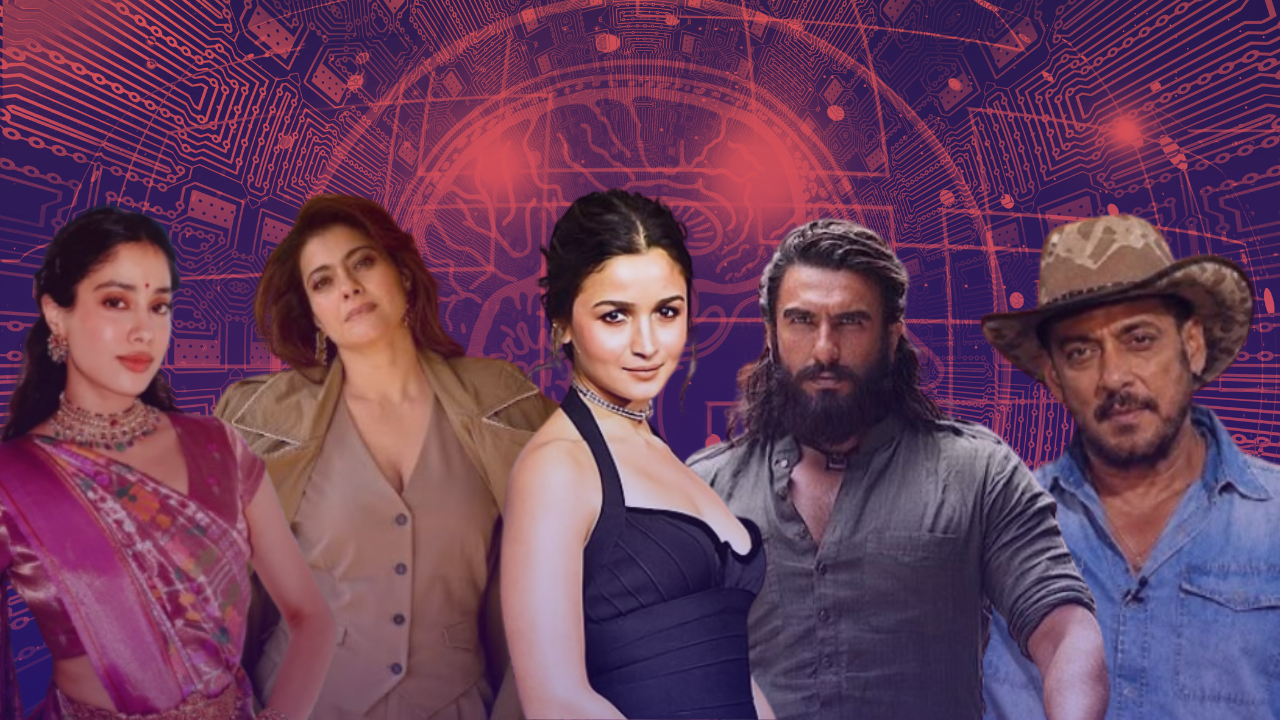
In the last two years, at least 25 celebrities have approached the courts to protect their name, face and other identifiable traits from being misused.
2022: Amitabh Bachchan was one of the first Indian celebs to approach the court after the advent of AI. He sought a broad injunction against unauthorised use of his name, photographs, voice and identifiable attributes, including in fake KBC lottery schemes.
2024: Jackie Shroff sought a permanent injunction curbing companies, social-media platforms and others from using or exploiting his name, image, voice and other personality traits.
2025: Aishwarya Rai Bachchan sought restraint against unauthorised use of her name, image, likeness and identity, including misuse through websites and online commercial activity.
A majority of these cases are in the Delhi High Court. Cases have been driven by AI deepfakes, voice cloning and unauthorised commercial use of celeb identities. From obscene content to bookings being made in the name of a celebrity, to misleading and false information, cases cover multiple such concerns.
Jahnvi Kapoor, Khushi Kapoor, Tabu, Preity Zinta, Sonakshi Sinha, Nagarjuna, Asha Bhosle, Shilpa Shetty, Ravi Kishen, Salman Khan, and even Abhishek and Aishwarya Rai Bachchan’s daughter Aaradhya. A cursory glance makes it clear that those falling prey cut across all age groups and regions. In fact, Aaradhya Bachchan’s case is layered, as it has to do with a family name being misused. The court specifically asked how many generations down the line do family names still carry their weight.
In most such cases, the courts have ordered certain URLs to be taken down, and platforms were asked to provide user details.
Madhu Gedodia, a lawyer who has represented the Bachchans and others like Varun Dhawan and Kartik Aryan says, “We are satisfied with the action taken by courts. Once the court order came, infringement by the parties concerned did come down.”
It’s Not Just a Bollywood Problem
So far, you may think that it is an issue celebs have to live with in a digital age. But is that only a ‘them’ problem?
Alakh Pandey, founder of edtech platform Physicswallah, approached the Delhi High Court alleging that his image, likeness and recognisable catchphrase ‘Hello Bachchon’ was being misused to cheat people in a coupon code scam. There were also impersonation pages with defamatory content.
Last year, AI videos of well-known cardiothoracic surgeon Dr. Naresh Trehan started doing the rounds, where he was seen propagating natural remedies for medical conditions. Plaintiffs argued that the intent was to mislead people into buying unapproved medicines using the goodwill of Dr. Trehan and the Medanta brand, the hospital chain started by him.
In 2024, Dr. Devi Shetty, a renowned cardiac surgeon, also filed a similar case against operators of several Facebook pages who were spreading doctored videos of him, advocating misleading health advice.
Last year, the Delhi High Court directed takedowns of deepfake videos featuring finance expert and YouTuber Ankur Warikoo giving fake stock market advice.
These highlight that personality rights cases are not just a matter of protecting reputations. They can have a harmful large-scale impact if the goodwill of an industry expert is exploited.
The sudden barrage of personality rights cases has also triggered questions about whether the laws and rules protecting these rights also need to evolve.
Mimansa Ambastha is a lawyer who focuses on AI, privacy and cyber-security. She says, “The Information Technology Rules 2026 have been framed keeping these concerns in mind, and people can ask tech platforms to take down such content in a matter of 2 hours. The timelines for taking down other objectionable content have been reduced considerably. One doesn’t even need to go to court. In case you are not satisfied with the intermediary’s final resolution, you can move the court. The Delhi High Court has especially been proactive in recognising personality rights cases.”
Madhu Gedodia disagrees. “Yes, the courts are acting. But there is a need for stronger codified laws.” Few other lawyers argue that it’s not about new laws, but more about law enforcement and assigning responsibility.
Are Big Tech Platforms Liable?
Big Tech platforms like Meta, Google and YouTube were not a direct party in most cases. But they were mentioned in petitions and included in court proceedings so that they could follow the orders to take down content. But is that where their responsibility ends?
“Tech platforms should do more”, asserts Nizam Pasha, a lawyer who has represented celebrities like Salman Khan, Hrithik Roshan and Karan Johar in personality rights cases filed in 2025. “The question of their liability needs to be assessed. Due diligence requirement for intermediaries under the IT Act has to be discharged by tech platforms before they can escape liability. They often argue in court in these cases, defending objectionable content identified by the plaintiffs, while simultaneously claiming safe harbour from liability for it. When the court orders for one URL to be taken down, but similar content is mirrored on other pages on the same platform, they claim they can’t locate them unless the specific URL is provided.”
But the other side of the coin suggests a grey area. In two cases, that of Jackie Shroff’s in 2024 and Jahnvi Kapoor’s this year, the court refused to extend a blanket protection. Where the content was not obscene or outrightly defamatory, the courts did not order a takedown of the URL’s, including fan pages. In fact, that is where a lot of tech platforms argue that, apart from derogatory, abusive, obscene and obviously fraudulent content, taking down pages where a celebrity is featured may lead to curbing freedom of expression.
Should a Common Person Be Concerned?
With a rise in unregulated AI and deepfake content on social media platforms, a common man becomes more vulnerable to cyber-bullying and harassment. While celebs are using ‘personality rights cases’ to take down deepfakes, what remedies does a common person have?
“Deepfakes have quadrupled over the past two years. Money, time and technology are no longer factors. Earlier, one would need hours of a person’s footage and expensive tools to make an objectionable video. Today, non-consensual intimate content can be deep-faked in a matter of minutes, with minimal investment,” says Mimansa.
Internationally, the AI Act by the European Union is the first ever legal framework that addresses the risks posed by Artificial Intelligence. The aim is to be able to ensure that Europeans trust what AI has to offer, that it’s safe, human-centric and safeguards the fundamental rights of citizens.
Back in India, for now, we are in a bit of legal limbo. No dedicated law, no one-size-fits-all rulebook. Technology is not pausing for legislation to catch up. Delhi High Court may have become the unofficial ground zero for personality rights in India. But bigger questions remain.
Does India need a law that spells out where freedom of expression ends, and identity theft begins?
Should tech platforms take more ownership?
Till then, all eyes are on courts and their scales of justice to strike that balance.